Back
When purchasing any kind of processed food, and in order to know exactly which chemicals have been used in its production, all consumers have to do is consult the information on the product’s label. But in the case of wine, how can consumers obtain this information?
The list of chemical products that are permitted to be added to wine is immense—numbering in the dozens. Yet on wine bottle labels, only one of these products—the preservative sulphite—is required to be mentioned. As a result, when drinking a wine, consumers have not the slightest idea of what is actually passing from their glass into their bodies.

Diagram showing the additives permitted in the various types of wine.
And amid all this, a group of producers from France, Italy and Austria has decided to go against the tide of mass production and take things further than simply putting a “Bio” label on the bottle. They have drawn up a charter—a declaration of principles defining the framework within which they operate. The emphasis on the human dimension is crucial: the producer does not lie to consumers, and even the label itself must embody this ethical transparency. The vineyard—the natural world—is the Vins S.A.I.N.S. grower’s tool; the grape is a food; wine is fermented grape juice, without sulphites, something vibrant and free.
CHARTER OF THE S.A.I.N.S WINES (i.e. without Any Input or Sulphite “added”)
The present Charter is written, acknowledged and assumed by The S.A.I.N.S. Wines Association. It is the backbone of this association whose members (individually or collectively) must necessarily commit themselves to respecting it in its entirety every year if they wish to claim their membership. This charter is essentially based on three main principles which cannot be dissociated:
The human dimension is primordial. First of all, a wine grower (a person who grows grapes and makes his wine) belonging to The S.A.I.N.S. Wines Association respects the consumers and more generally the people he is likely to meet in any situation connected with his profession. He never lies about the whole of his methods – whatever the level of communication (oral or written, including websites and the labelling of the bottles). Moreover, a wine grower of The S.A.I.N.S. Wines Association has a sense of solidarity, cooperation, friendship and sociability.
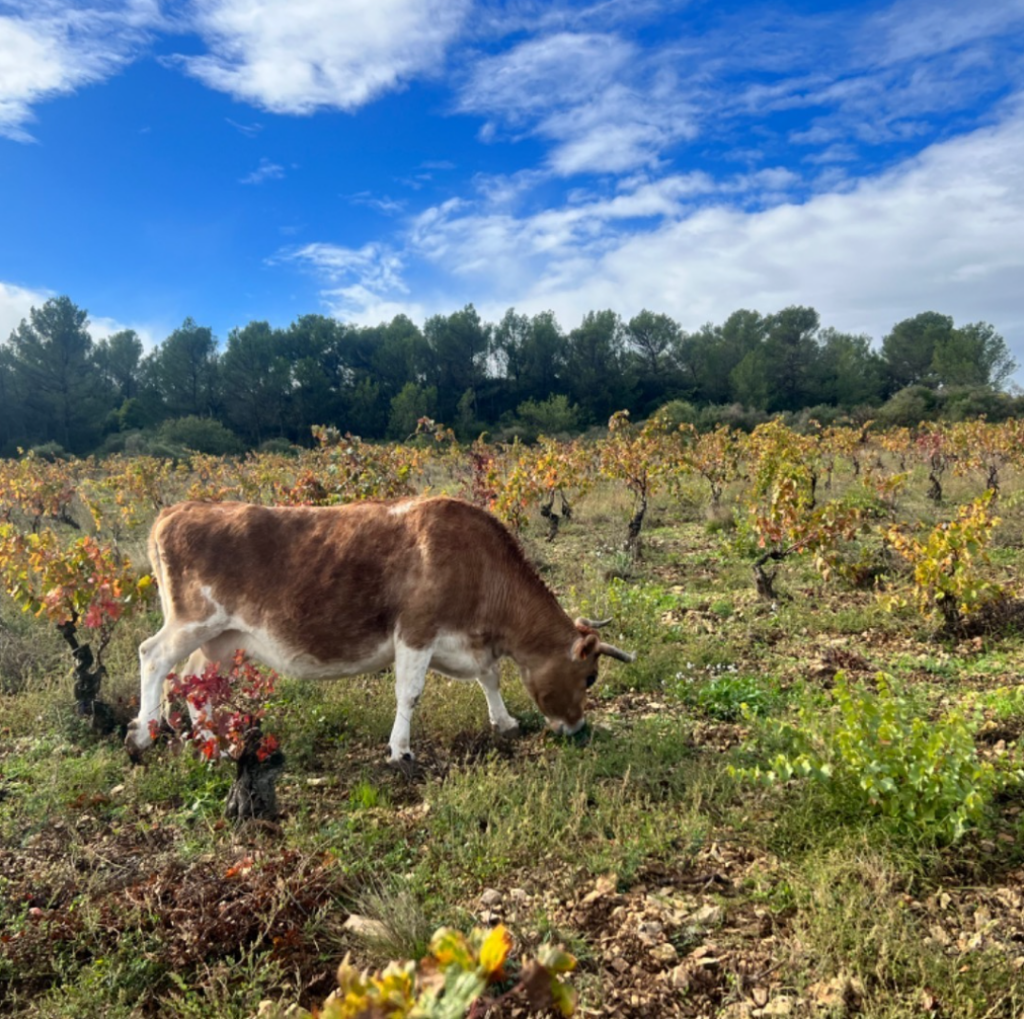
Nature is the main tool. Whatever his methods (tillage, natural grassing etc.) and labels, a member of The S.A.I.N.S. Wines Association must necessarily, in 100% of his wine growing activity, collect ripe grapes by hand and renounce the use of any chemicals and synthesis products. The S.A.I.N.S. Wines Association requires optimal food quality for the grapes.
The pleasure of the senses is the culmination of a vintage. The transformation of grape juice into wine occurs in a natural way and only with the help of yeasts and native bacteria. Thanks to experience, a wine grower of The S.A.I.N.S. Wines Association adapts to seasons and grows his wines without, at any stage of the different processes of fermentation and bottling, using laboratory products or technologies aimed at accelerating the stability or the transformation of juices. Sulphites and other oenological inputs, in 100% of his wine growing activity, are therefore not used. The S.A.I.N.S. Wines Association requires optimal food quality for the wines. A wine grower of The S.A.I.N.S. Wines Association produces S.A.I.N.S wines (i.e. without Any Input or Sulphite “added”) in 100% of his wine making activity.
(Note: For further information on the wine growing practices, you can consult the EXECUTION RULE (EU) N° 203/2012 OF THE COMMISSION of 8th March 2012 modifying rule (EC) N° 889/2008 about the modes of enforcement of regulation (EC) N° 834/207 of the Council concerning organic wine and the USE OF OENOLOGICAL INPUTS on the website of the French Institute for vine and wines: http://www.vignevin.com/pratiques-oeno/)